Last updated October 2026
Plenty of Whangārei homes still have the wood burner that came with the house. It might have been put in decades ago, the door seal has seen better days, and it eats firewood without doing much for the far end of the lounge. Replacing it seems like a simple swap: take the old one out, put a new one in the same spot.
★View the Best Fireplace Installers in Whangarei→It is rarely quite that simple. A replacement is treated much like a new install, and the old flue and hearth often need work too. Here is what is involved, so you know what to ask before anyone gives you a quote.
Why a straight swap still needs a consent
Installing a solid fuel heater is building work that needs a building consent, and that includes replacing an existing fire with a new one. The consent is issued by the Whangārei District Council, and once the job is done an inspection confirms it was installed as consented. That sign-off is what leads to the code compliance certificate for the work.
It matters for more than paperwork. Insurers commonly want evidence that a fire was installed properly, and a fire that went in without a consent can cause problems when you sell the house or make a claim. The Government’s building site has a plain-English guide to solid fuel heaters and the Building Code if you want the detail.
The consent also sets the timeline. The install itself is often a day’s work, but the consent has to be granted first, so the sensible time to start is well before the first cold snap rather than in the middle of June.
The emissions rule that affects which fire you can choose
New wood burners installed on urban-sized properties have to meet a national design standard for emissions and efficiency, set under the National Environmental Standards for Air Quality. In practice, the fires sold by mainstream brands for town sections are already built and tested to meet it.
Where this catches people out is with second-hand or older fires. A fire that was fine to install years ago may not meet the standard now, so buying a used burner off a listing site to save money can leave you with something the council will not consent. If a price looks too good, ask whether the model is on the approved list before you pay for it.
What else usually gets replaced
The fire is only part of the job. When an old burner comes out, a few other things are often worth replacing at the same time.
The flue
Flues wear out. Older flue systems may be the wrong size for a modern fire, may not have the right clearances to timber framing, or may simply be corroded after years of use. Many installers will quote a new flue kit with the fire rather than connect a new appliance to an old flue, and in a lot of cases the consent will require it.
The hearth and floor protection
A modern fire may have a different footprint, and the required hearth size and floor protection depend on the specific appliance. An existing hearth that suited the old fire may be too small or too thin for the new one.
The wall shielding
Clearances from walls are set for each model. If the new fire sits closer to a wall than the old one did, heat shielding may be needed, which is another line on the quote.
None of this is an upsell. It is the difference between a fire that passes inspection and one that does not.
Choosing the right size
Bigger is not better. An oversized fire in a small or well insulated living area gets turned down low to stop the room overheating, and a wood burner that is run low for long periods burns inefficiently and dirties the glass and flue. An undersized one runs flat out and still leaves the hallway cold.
The right size depends on the area you want to heat, how well the house is insulated, ceiling height and layout. Whangārei’s winters are mild compared with the south, but the damp is real, and plenty of older homes here lose heat quickly. A good installer will look at the room before recommending a fire rather than choosing one from a brochure.
What to ask before you accept a quote
Quotes can look very different from one another because they include different things. Ask:
- Does the price include the consent? That means preparing and lodging the application, the council fee, and the final inspection.
- Is a new flue included? If not, ask why the existing one is suitable.
- What about the hearth and wall shielding? These are the common extras that appear after the fire has been chosen.
- Who removes the old fire? And whether disposal is included.
- Who is installing it? Check they are experienced with solid fuel heaters. The New Zealand Home Heating Association sets training and installation standards for the industry.
- What happens after it is in? Ask about servicing, spare parts and who to call if something needs attention later.
Asking these questions early saves a second round of pricing and avoids surprises once work has started.
Where Stihl Shop Whangarei fits
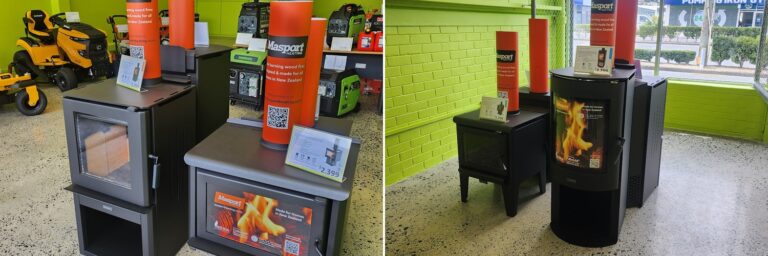
Stihl Shop Whangarei on Reyburn Street runs a heating side alongside its outdoor power equipment business, with a specialist heating sales and service technician. The showroom has Masport, Metro and Firenzo wood fires on display, set up fully assembled, so you can see the size and finish of a fire before choosing one.
For a new install or a replacement, the process starts with an on-site visit and a no obligation quote. If you go ahead, the team manages the supply, the installation and the building consent submission to council. It is worth bringing the questions above to that visit, especially around the flue and hearth, so the quote covers the whole job.
The shop is open seven days, including Saturday and Sunday mornings. To arrange an on-site quote, get in touch with the team on 09 438 8841, or visit stihlshopwhangarei.co.nz.