Last updated October 2026
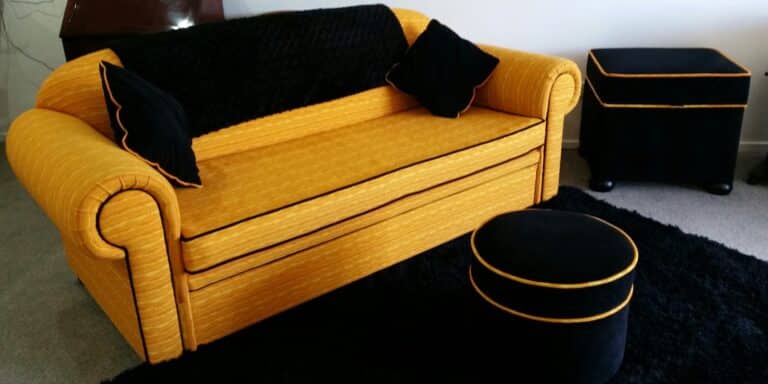
A tired couch is one of the first things people think about replacing, but in a lot of Whangarei homes the better answer is to reupholster it. A well-built sofa can be stripped back to its frame, repaired and recovered in a new fabric, and come out of the workshop looking and feeling like a different piece of furniture. This guide covers when reupholstering a couch makes sense, what the job actually involves, how to choose a fabric and what drives the cost.
★View the Best Antique Restoration in Whangarei→Is it worth reupholstering a couch?
The honest answer depends on what is underneath the fabric. Reupholstering is labour-heavy work, so it pays off on furniture that is built well enough to last another twenty years, and less so on a cheap flat-pack sofa that was never meant to.
It is usually worth it when:
- The frame is solid timber and the joints are tight, or only need regluing.
- The couch is older. Many sofas from earlier decades were built with hardwood frames, coil springs and proper webbing, which is better construction than a lot of what is sold new today.
- It has sentimental value, such as a piece inherited from parents or grandparents.
- It fits the room. A couch that is exactly the right size and shape for a space is hard to replace off the shelf.
- It is a good brand. Quality branded furniture tends to be comfortable and long-lasting, and recovering it keeps that.
It is usually not worth it when the frame is particleboard or staples into soft timber, the frame is cracked in several places, or the couch was inexpensive to begin with. A good upholsterer will tell you this at the quoting stage rather than take the job.
What reupholstering involves
People often picture a new cover going over the old one. A proper reupholstery job goes much further than that.
1. Stripping back. The old fabric, padding and often the foam come off, so the upholsterer can see the frame, springs and webbing.
2. Frame repairs. Loose joints are reglued, cracked rails replaced and weak corners braced. This is the part that decides how long the finished couch lasts.
3. Springs and webbing. Sagging seats usually come from tired webbing or springs rather than the foam, so these are retied, replaced or retensioned.
4. Foam and padding. Seat foam flattens over the years. Replacing it, or wrapping it in fresh fibre, brings back the shape and comfort of the cushions.
5. Cutting and fitting the new cover. Patterns are matched across cushions and arms, piping is made up if the design has it, and the fabric is fitted and fixed to the frame.
Partial work is possible too. If the frame and springs are sound, a couch may only need new seat foam and covers, which is a smaller job.
Choosing the fabric
The fabric is where most of the decisions are, and it has the biggest effect on how long the finished couch looks good.
Upholstery-grade fabric
- Suits
- Most lounge suites and family couches
- Things to know
- Ask about its rub count (abrasion rating). Higher counts stand up better to everyday use, kids and pets.
Leather
- Suits
- Classic and modern pieces where durability matters
- Things to know
- Ages well and wipes clean, but costs more and needs conditioning.
Vinyl (imitation leather)
- Suits
- Kitchen seating, kids’ furniture, rentals
- Things to know
- Easy to wipe down and hard-wearing, with less breathability than fabric.
Velvet and textured weaves
- Suits
- Feature pieces and antiques
- Things to know
- A rich look, but they show wear on arms and seat fronts sooner.
A few practical points help with the choice:
- Sun. Northland gets strong sun, and a couch sitting in front of a north-facing window will fade. Darker and solution-dyed fabrics hold their colour better.
- Humidity. Whangarei’s damp, humid months can encourage mildew in rooms that do not get much airflow, so a fabric that can be cleaned easily is worth considering for a lounge that gets closed up.
- Pattern. Large patterns need extra fabric so they line up across the cushions and back, which adds to the material cost.
- Upholstery grade only. Curtain and dressmaking fabrics are not built for seating and will wear through quickly.
What affects the cost
There is no single price for reupholstering a couch, because two sofas of the same size can be completely different jobs. The main things an upholsterer looks at when quoting are:
- Size and style. A three-seater with loose cushions, buttoning and scrolled arms takes far more hours than a simple two-seater.
- The amount of fabric, which rises with size, cushions, piping and pattern matching.
- The fabric itself. Leather and premium fabrics cost considerably more per metre than standard upholstery fabric.
- Repairs found once it is stripped. Frame and spring work can only be fully assessed when the old cover comes off, so a quote may include an allowance for it.
- Foam. New seat foam adds cost, but it is often what makes the couch feel new rather than just look it.
For a fair comparison, get the quote in writing, ask what is included (foam, springs, piping, pick-up and delivery) and compare it against buying a new couch of the same build quality, not just the same size.
Is reupholstering cheaper than buying new?
Sometimes, but not always, and price is rarely the whole picture. Recovering a good couch can cost as much as a mid-range new one. The difference is what you end up with: a solid timber frame with new springs, foam and fabric of your choice, rather than a new sofa that may not be built as well. There is also a waste angle. A couch is bulky to dispose of, and keeping a sound frame out of landfill is one of the reasons many people choose to recover rather than replace.
Chairs, ottomans and the rest of the set
The same thinking applies to armchairs, wingbacks, dining chairs and footstools. Dining chairs are often the quickest win: the seat pads unscrew, and new foam and fabric can transform a set in a short time. Recovering a matching armchair or ottoman at the same time as the couch also keeps the room consistent, since fabric dye lots can vary between orders.
Where Whangarei Upholstery fits
Whangarei Upholstery is run by Goldie and Trish from their workshop at 23 Lockheed Place in Onerahi. The business operated in Auckland from the late 1980s before moving to Whangarei, and works on furniture from modern pieces to antiques, recovering completely or partly while respecting the original materials and techniques. Their sofa upholstery service covers couches, sofas and lounge suites, with fabric, leather or vinyl chosen from their own stock or New Zealand suppliers. They also recover chairs, footstools and headboards, and their before and after gallery shows finished work. Quotes are free, pick-up and delivery can be arranged, and the workshop is open weekdays and Saturday mornings. Call Goldie on 027 412 7246 or Trish on 027 249 0646.